

On May 14, the Ukrainian Marketing Association held a webinar with the participation of Maxwell Minckler, Head of Marketing Insights at Google in EMEA (Maxwell Minckler, Insights Lead for Europe, the Middle East, and Africa, Google)
During his speech, he presented Google’s research on business transformation, marketing, and the role of AI in companies, as well as shared a practical playbook for the implementation of artificial intelligence in organisations.
This event was made possible thanks to Natalia Pysarenko, a Board member of the UAM, who initiated a webinar for the Ukrainian marketing community.
At the webinar, Max Minquel presented the results of a large-scale study on business transformation through artificial intelligence: how companies implement AI and why some are pulling ahead and leading in AI.
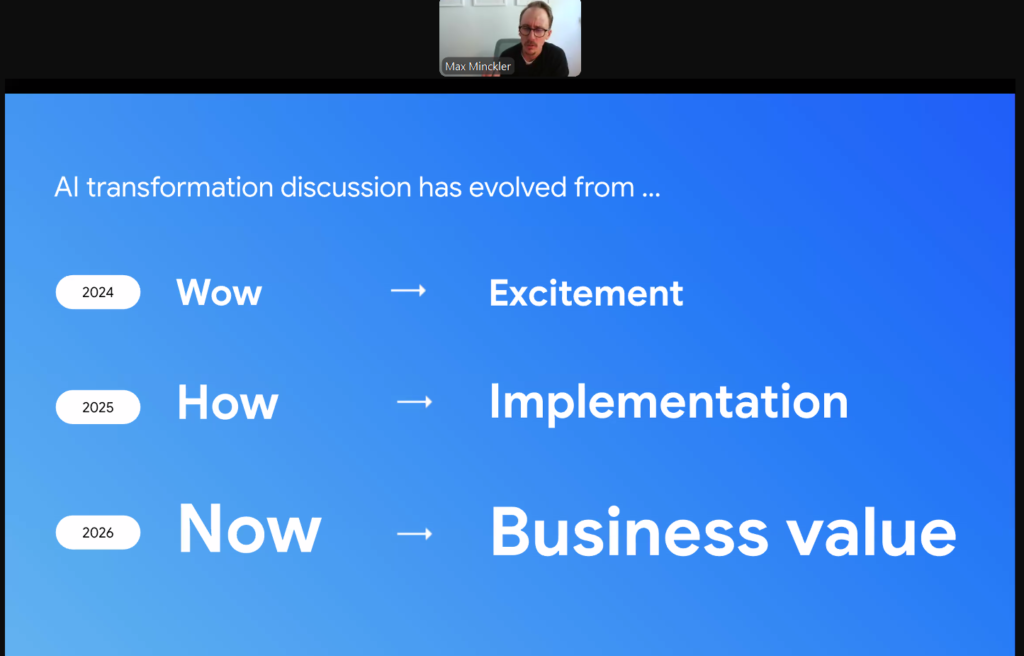
Max noted that the debate around AI has changed significantly over the past few years. Initially, the focus was on new creative opportunities and functionality, but in 2025 the main issue was implementation: how to integrate AI into business and rebuild processes and structures. In 2026, the focus has shifted to creating business value and the real impact of AI on company results.
The speaker presented three main models of attitudes towards AI.
The first is FOMO (fear of missing out), the fear of being left behind in the trend that drives companies towards chaotic and often superficial AI adoption.
The second is FOMU (fear of messing up), the fear of making mistakes, which, on the contrary, inhibits experimentation and slows change.
According to Max, companies often get stuck between these two extremes – excessive haste and excessive caution. That is why researchers have identified a third model of thinking – FOMA (focus on maximising advantages), that is, a focus on maximising the benefits of AI.
Max also discussed creating a practical playbook for companies, which should help shift to the FOMA mindset and implement AI more effectively.
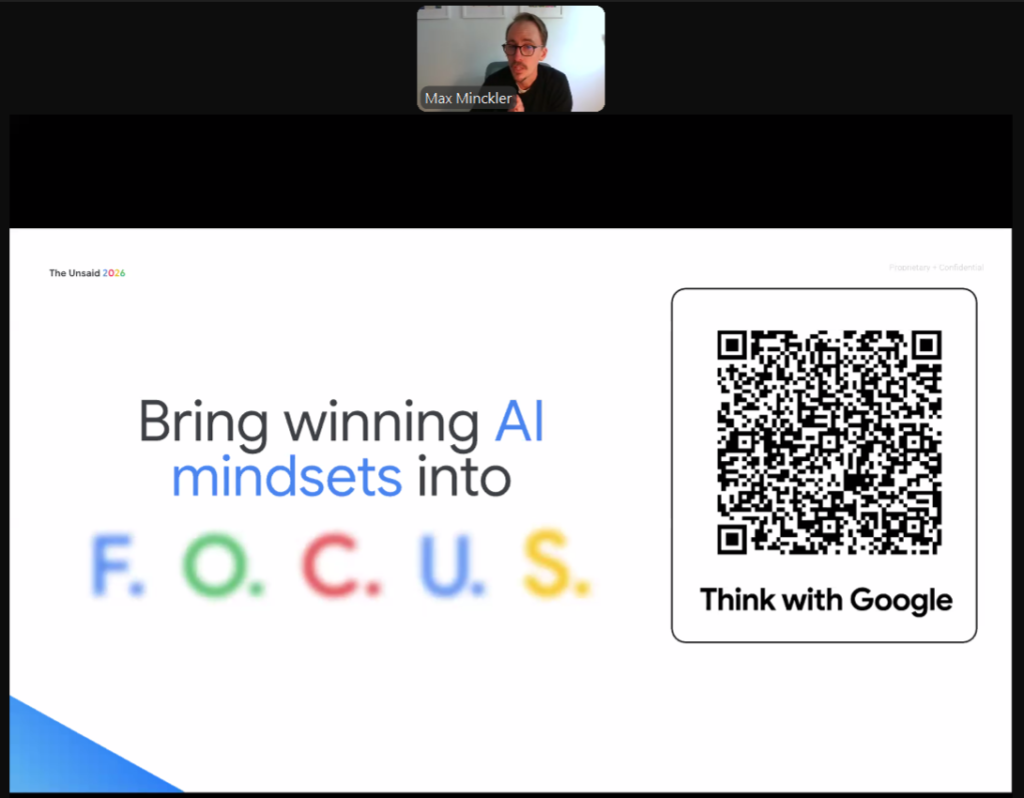
A Playbook consists of five components:
Frame the why – the need to clearly define the “why” behind implementing AI.
Own the loop – not just being “in the loop of the process”, but owning it.
Cultivate capability – the importance of continuous, practical work with AI tools, which enables you to move from theory to real use and value.
Uncover the unsaid – creating a space where teams can openly discuss their experiences with AI, including difficulties and successes.
Stoke the system – building new habits, cultures, and skills that shape the system around AI and determine its real use in organisations.
Max noted that he only presented a high-level overview of the playbook, and more detailed materials will be available from Google on Think with Google
We thank the webinar participants for their activity, meaningful and interesting questions to the speaker.
See you at the next UAM events, we will continue to exchange ideas and practices.